Being selected to represent Thadiq National Garden as part of my school’s DOME Global School Program was more than just an opportunity it was a responsibility. It wasn’t simply about participating in an event; it was about representing a real environmental initiative that addresses a serious global issue. Desertification is a growing challenge, especially in regions like Saudi Arabia, where land degradation impacts ecosystems, agriculture, and long-term sustainability. Being part of a program that actively works toward solutions made the entire experience far more meaningful.
Through the DOME Global School Program, I had the chance to engage with a bigger platform where ideas, innovation, and environmental responsibility come together. Representing Thadiq National Garden in this setting meant I had to clearly communicate its purpose and impact. The project itself focuses on restoring degraded land, improving soil conditions, and supporting biodiversity key elements in the fight against desertification. Understanding these aspects in depth allowed me to present not just information, but a solution-driven perspective.
My role involved explaining how Thadiq National Garden contributes to combating desertification. This included breaking down complex environmental concepts into clear, practical ideas such as how vegetation reduces soil erosion, how sustainable irrigation techniques help maintain water efficiency, and how projects like this can be replicated in other regions. It required me to think critically and present confidently, ensuring that the message was both informative and engaging.
What made this experience stand out was the level of responsibility that came with representation. I wasn’t just speaking about a project I was representing its impact, its purpose, and its potential. This pushed me to go beyond basic understanding and really think about how to make the audience see the importance of such initiatives. It taught me that effective communication is just as important as the work itself.
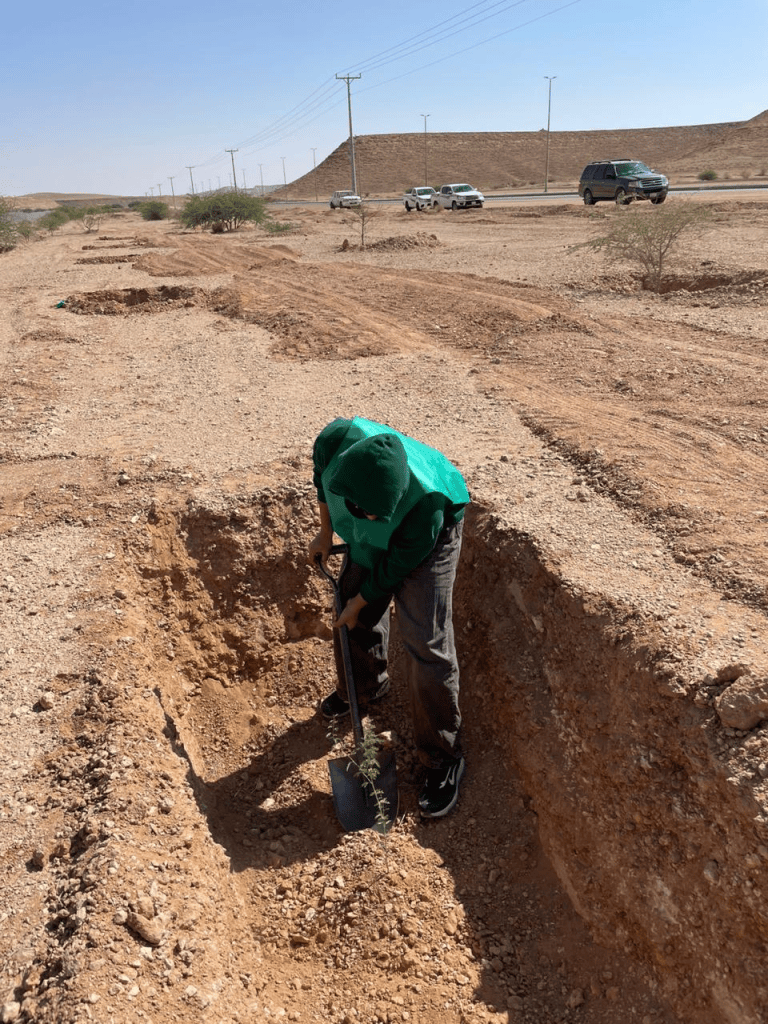
There were definitely challenges along the way. Explaining environmental concepts to different audiences meant adapting my approach, answering questions thoughtfully, and thinking beyond what I had prepared. But those challenges were what made the experience valuable. They helped me build confidence, improve my communication skills, and handle responsibility in a real-world context.
More importantly, this experience shifted my perspective on environmental issues. Desertification is often viewed as a large-scale problem, but being part of this initiative showed me that real solutions can start locally. Projects like Thadiq National Garden demonstrate that with proper planning and commitment, it is possible to restore ecosystems and create sustainable environments even in harsh conditions.


Leave a Reply