• The death penalty, or capital punishment, has been debated across centuries on an ethical, legal, and social plane. It is regarded by some as a step necessary to deter crime and deliver justice to heinous crimes, but as being against human rights by others who view it as it may be essentially an act of perpetuating injustice. The moral and practical arguments for the death penalty depend on whether its benefits to society outweigh its ethical and practical concerns.

    Deterrence is among the most powerful arguments against the death penalty. Arguably, the reason that people do not commit serious offenses like murder and terror is that they are afraid of being put to death. For example, nations such as Singapore have strict capital punishment for drug trafficking and violent offenses, and they are relatively crime-free compared to other nations. These assertions are supposed to demonstrate that severe penalties are successful in maintaining order. Findings remain incomplete, though. The United States National Research Council found that there isn’t enough evidence available to demonstrate that the death penalty is a stronger deterrent than life imprisonment. That weakens the impact of deterrence as justification.

    Another motivation usually put forward is retribution according to the principle of making offenders deserving of punishment proportionate to their offense. Most of the victimized families believe that justice is not served until the criminal is given the death penalty. For instance, following the terror attack in Paris in 2015, France reasserted its hard stance against terror, and even though capital punishment does not exist in the country, there was a robust public sentiment in support of stringent punishment. Capital punishment is considered mostly as a closure for victim families as well as an indicator that justice exists in such communities in which crime critically disturbs peace.

    Aside from these assumptions, there are strong arguments against the justifiable use of the death penalty. One of them is the possibility of exceptions through erroneous conviction. In the United States, research has pinpointed instances where the death-sentenced were later proven to be innocent based on DNA evidence. Subsequent to this, such a mistake is irreparable, and hence the death penalty is a punishment prone to uncorrectable error. Besides, capital punishment has also been criticized as disproportionately affecting marginalized communities, as symbolizing prejudices within legal systems beyond pure justice.

    The second challenge is the ethical and moral aspect. Most global organizations, including the UN, consider the death penalty to be a violation of the right to life. More than 70% of all the nations on earth have renounced or suspended the death penalty, a recognition of a developing world consensus that justice does not necessarily require the loss of life. Alternative measures like life imprisonment without parole secure society without causing permanent harm.

    Finally, the rationale for the death penalty is intensely controversial. While its proponents place their trust in deterrence and retribution elements, its effectiveness is not necessarily proven and its risks of wrongful use and moral abuses bear heavily against it. Practical experience highlights that nations can ensure justice and security by having stringent legal provisions without recourse to execution. The death penalty cannot thus be justified universally, and states need to consider more humane and reasonable alternatives.

  • I was born in a factory, carved out of strong cedar wood and fitted with a slender core of graphite. My body was coated in bright yellow paint, polished until I shone, and topped with a small pink eraser fixed securely by a silver metal ring. That was the beginning of my journey: I was not just wood and graphite, but a tool with a purpose to turn thoughts into marks on paper.

    My first home was a stationery shop, where I rested quietly in a box alongside others like me. We looked identical, the moment someone picked me up, my individuality would begin. That day came when a student chose me, slipping me into a pencil case. From then on, my life of writing began.

    At first, I was sharp and eager, producing bold, dark lines across notebooks. I wrote alphabets, numbers, and hesitant sentences. Each word I formed felt like proof that I existed for a reason. I was part of learning, shaping the student’s ideas into something visible.

    Life in the classroom became my routine. I scribbled hurried notes when the teacher spoke quickly, solved complex math problems, and drew neat diagrams in science. I was chewed at the end during nervous moments, dropped on the floor more than once, and sharpened whenever I grew dull. None of this bothered me. My duty was simple: to serve, to create, to record.

    One of my most valuable qualities was my eraser. Unlike the permanence of ink, I gave my writer a chance to start over. Mistakes could disappear with a few gentle rubs, leaving space for improvement. This flexibility made me a quiet companion in experiments and rough drafts. I symbolized second chances proof that errors were part of the process, not the end.

    But being a pencil also meant change. With every sharpening, I lost a part of myself. My long body grew shorter, and sometimes my tip snapped under too much pressure. Still, with every sharpening, I returned renewed, ready to continue. My existence was never about staying the same; it was about becoming useful until the very end.

    Over time, I noticed how pens and computers began to take over. During exams, ink was favored, and later, keyboards captured more words than I did. Yet, I remained nearby, ready for sketches, diagrams, or a quick note. I was not the star of the desk anymore, but I was always present reliable, simple, and trustworthy.

    As I grew smaller, nearly too short to hold, I thought about all I had left behind. I had written lessons, reminders, grocery lists, and even quiet secrets hidden in margins. Though my wood wore down, my marks on paper remained. That was my true legacy.

    My life as a pencil may seem ordinary, but it was filled with countless contributions. I did not aim for glory or permanence. Usefulness, humility, and persistence an autobiography written in the many words I helped bring to life.

  • If I had all the resources in the world to myself for 24 hours, I would not waste it on something impossible or over-the-top. I would put it into long-term interests, things that I care about and can keep developing after the 24 hours have passed.

    I would start by addressing finance. I’ve always been fascinated by the workings of the financial universe, not just stock trading, but how markets flow around the world, how institutions think, and how wealth is built over the long haul. So I would invite leading economists, investment analysts, and financial strategists to visit and educate me on everything I might learn in a day. I would book individual appointments to ask questions I don’t have the time to ask at school, such as how market psychology operates, or how to recognise true trends during a hectic economy. I would have them assist me in charting a course toward financial consultantship, the career for which I’m interested.

    I would then do something that makes it easier for students like me to learn about finances. An overwhelming number of teens finish high school without a clue about how to budget, save, or even what a credit score is. If I had the world’s best technology platforms and designers at my disposal, I’d ask them to work with me to create a financial tool or app that makes money and markets accessible to use the same social formats we already use, like short video clips, question-and-answer boards, or game-based learning. It’d be student-made, by students, with the guidance provided by experts.

    I’d also dedicate some part of the day to optimising myself with the world’s best tools at my disposal. I’d collaborate with AI, personal trainers, and mental health coaches to discover how I think, how I learn, and how I develop habits that drive me. Not on becoming someone else, it’s on becoming a better version of me and exercising discipline enough to remain consistent.

    Even though 24 hours is short, I don’t see it as restrictive. I would use it as a launching pad, a period for gathering tools, information, and advice that could serve me for a few years. I would not stress about how I was going to make a difference in 24 hours. I would be watching for how I could learn more about it, and continuously be involved in making it better.

    In the end, having unlimited resources for 24 hours wouldn’t be about doing something crazy; it’d be about setting myself up for the future. I’d take that rare opportunity to gain real knowledge, build tools that help others, and level up mentally and physically. Even though the time is limited, the impact wouldn’t be. I would utilise it to establish the basis for all that I am about to accomplish, particularly in the field of finances and personal development. Because true transformation does not occur within a single day but with a good beginning, you’re able to sustain the energy long after the 24 hours have passed.

  • Introduction to Rich Dad Poor Dad

    Rich Dad Poor Dad by Robert Kiyosaki is one of those books that gets hyped constantly you hear students, investors, and random people online saying it “changed their life.” When you finally read it, you start to see why. It isn’t stuffed with complicated financial formulas or intimidating jargon. Instead, Kiyosaki uses storytelling to share ideas most schools never teach, and that’s what makes it powerful.

    Key Insight: Simple storytelling can deliver financial lessons more effectively than complex formulas.

    Two Fathers, Two Mindsets

    The book revolves around two father figures. One is his real dad, the poor dad, highly educated but never financially free. The other is his friend Mike’s dad, the rich dad, who might not have excelled in school but has a sharp understanding of money. Kiyosaki doesn’t bash education or worship wealth. He simply shows how these two contrasting mindsets book learning versus money smarts shape life paths.

    Key Insight: Mindset, more than formal education, shapes financial outcomes.

    Learning by Experience

    Kiyosaki’s stories from his childhood in Hawaii make the lessons memorable. He and Mike worked in Rich Dad’s little store for almost no pay. It wasn’t about cash it was about learning how money moves, observing cash flow, and figuring out how to make money work for you. That’s where the core lesson hits: rich people don’t chase money money chases them.

    Key Insight: Real financial education comes from experience, not just theory.

    Assets vs Liabilities

    One of the book’s simplest but most important lessons is the difference between assets and liabilities. Assets put money in your pocket; liabilities take it out. Most people misjudge this, thinking fancy cars or big houses make them rich, when in reality, they drain cash flow. Real assets generate income over time rentals, businesses, stocks, or ideas that appreciate.

    Key Insight: True wealth is built by acquiring assets, not liabilities.

    Mindset Matters

    The contrast between the two dads is clear: Poor Dad represents the safe route study hard, get a job, follow the rules. Rich Dad represents calculated risk-taking, tax knowledge, and owning systems instead of being a worker. Kiyosaki doesn’t tell you which path to pick; he shows how mindset alone can shape your life trajectory.

    Key Insight: Adopting an owner’s mindset opens opportunities that a worker’s mindset limits.

    Financial Literacy

    Financial literacy is at the heart of the book. Kiyosaki explains cash flow, taxes, investment basics, and how businesses work things schools often skip. Most adults graduate knowing math but remain clueless about loans, taxes, and investments. That gap keeps people financially stuck, and Kiyosaki fills it with practical, actionable advice.

    Key Insight: Understanding how money works is more important than academic knowledge alone.

    Overcoming Fear

    Fear is a huge barrier to wealth. Losing money scares most people and prevents them from taking opportunities. Kiyosaki emphasizes that the rich don’t avoid risk they manage it. While middle-class people cling to “safe wins,” the rich chase opportunities, take calculated risks, and build cash flow engines.

    Key Insight: Wealth comes from managing risk, not avoiding it.

    Learning by Doing

    The book stresses learning by doing. Skills grow through action: small bets, mistakes, market research, flipping items, and trying new ventures. Kiyosaki pushes growth, not blind hustle. Skills like marketing, negotiation, sales, leadership, and spotting opportunities become lifelong tools when actively practiced.

    Key Insight: Action and experimentation are the foundation of financial growth.

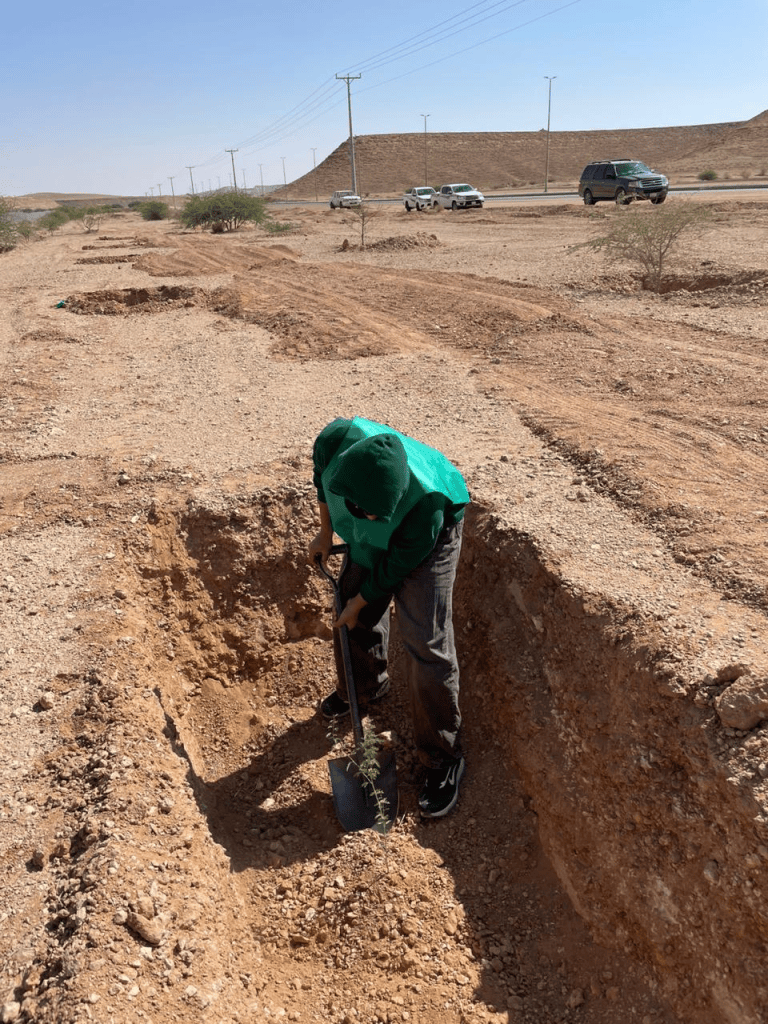
  • Being selected to represent Thadiq National Garden as part of my school’s DOME Global School Program was more than just an opportunity it was a responsibility. It wasn’t simply about participating in an event; it was about representing a real environmental initiative that addresses a serious global issue. Desertification is a growing challenge, especially in regions like Saudi Arabia, where land degradation impacts ecosystems, agriculture, and long-term sustainability. Being part of a program that actively works toward solutions made the entire experience far more meaningful.

    Through the DOME Global School Program, I had the chance to engage with a bigger platform where ideas, innovation, and environmental responsibility come together. Representing Thadiq National Garden in this setting meant I had to clearly communicate its purpose and impact. The project itself focuses on restoring degraded land, improving soil conditions, and supporting biodiversity key elements in the fight against desertification. Understanding these aspects in depth allowed me to present not just information, but a solution-driven perspective.

    My role involved explaining how Thadiq National Garden contributes to combating desertification. This included breaking down complex environmental concepts into clear, practical ideas such as how vegetation reduces soil erosion, how sustainable irrigation techniques help maintain water efficiency, and how projects like this can be replicated in other regions. It required me to think critically and present confidently, ensuring that the message was both informative and engaging.

    What made this experience stand out was the level of responsibility that came with representation. I wasn’t just speaking about a project I was representing its impact, its purpose, and its potential. This pushed me to go beyond basic understanding and really think about how to make the audience see the importance of such initiatives. It taught me that effective communication is just as important as the work itself.

    There were definitely challenges along the way. Explaining environmental concepts to different audiences meant adapting my approach, answering questions thoughtfully, and thinking beyond what I had prepared. But those challenges were what made the experience valuable. They helped me build confidence, improve my communication skills, and handle responsibility in a real-world context.

    More importantly, this experience shifted my perspective on environmental issues. Desertification is often viewed as a large-scale problem, but being part of this initiative showed me that real solutions can start locally. Projects like Thadiq National Garden demonstrate that with proper planning and commitment, it is possible to restore ecosystems and create sustainable environments even in harsh conditions.

  • For as long as I can remember, temple donations have been a part of my life. Growing up in a family that values faith, gratitude, and community, I’ve watched my parents lead by example. What started as a childhood observation has now become a personal practice I carry with pride.

    Temple donations, or annadanamkaasu mala, and temple upkeep contributions, are more than just financial transactions. They are acts of devotion, gratitude, and service. They connect us to something larger than ourselves to God, to our community, and to our roots.

    Here’s why temple donations matter, and how my family’s journey has shaped my understanding of this beautiful tradition.

    A Tradition Rooted in Faith

    My family has been donating to temples for generations. It’s not something we do out of obligation, but out of love and reverence. Whether it’s a small contribution to feed the hungry or a larger donation for temple renovations, every rupee given is offered with a pure heart.

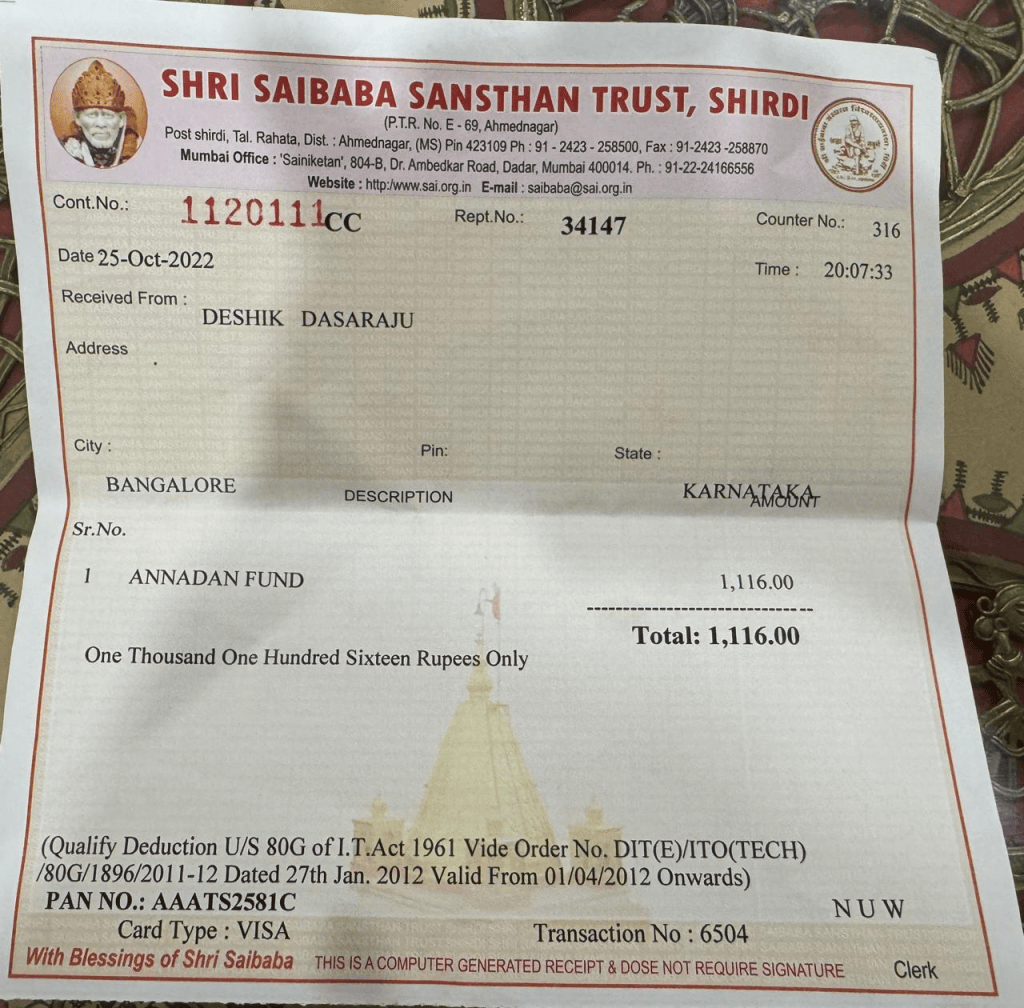
    One of our most cherished traditions is contributing to Annadanam the sacred practice of offering free meals to devotees. In October 2022, I had been saving up for something I wanted maybe a new gadget, maybe some clothes, I don’t even remember anymore. But when the opportunity came to contribute to the Shri Saibaba Sansthan Trust in Shirdi, something clicked. I told my parents I wanted to give from what I had saved.

    The amount was ₹1,116. It wasn’t huge, but to me, it meant everything.

    The Power of Collective Giving

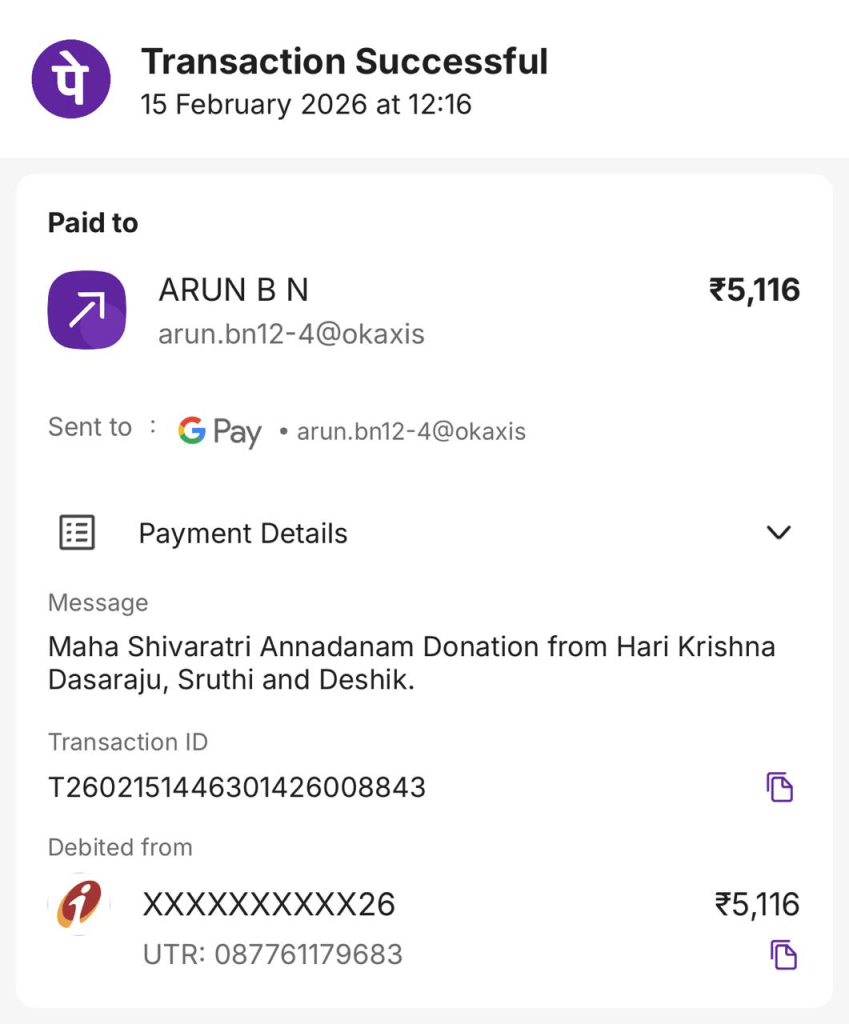
    In February 2026, on the holy occasion of Maha Shivaratri, we contributed again to an Annadanam fund. This time, the donation was made in the names of Hari Krishna Dasaraju, Sruthi, and Deshik . The amount, ₹5,116, was sent with a simple prayer: may everyone who receives this food be blessed with health and happiness.

    Donations as a Form of Gratitude

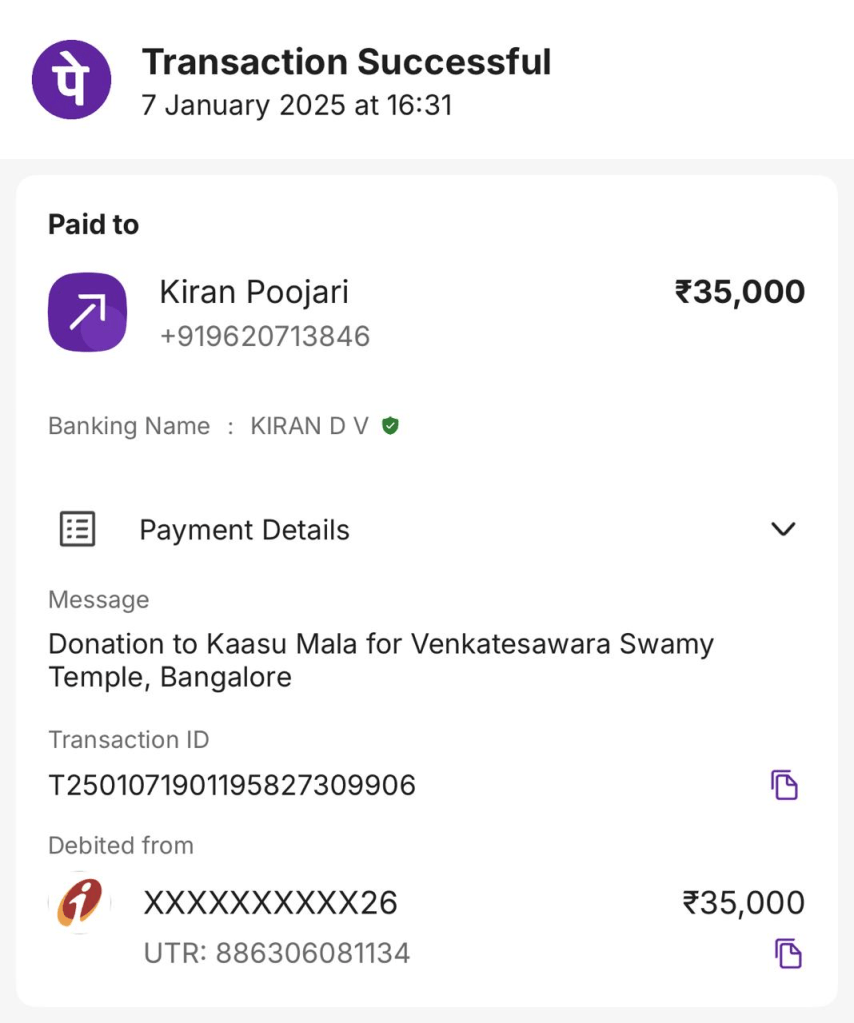
    In January 2025, we had the privilege of contributing ₹35,000 toward the Kaasu Mala for the Venkatesawara Swamy Temple in Bangalore. The donor, Kiran Poojari, helped facilitate this offering. For those unfamiliar, Kaasu Mala is a traditional offering of coins strung together, often presented to the Lord as a symbol of prosperity and gratitude.

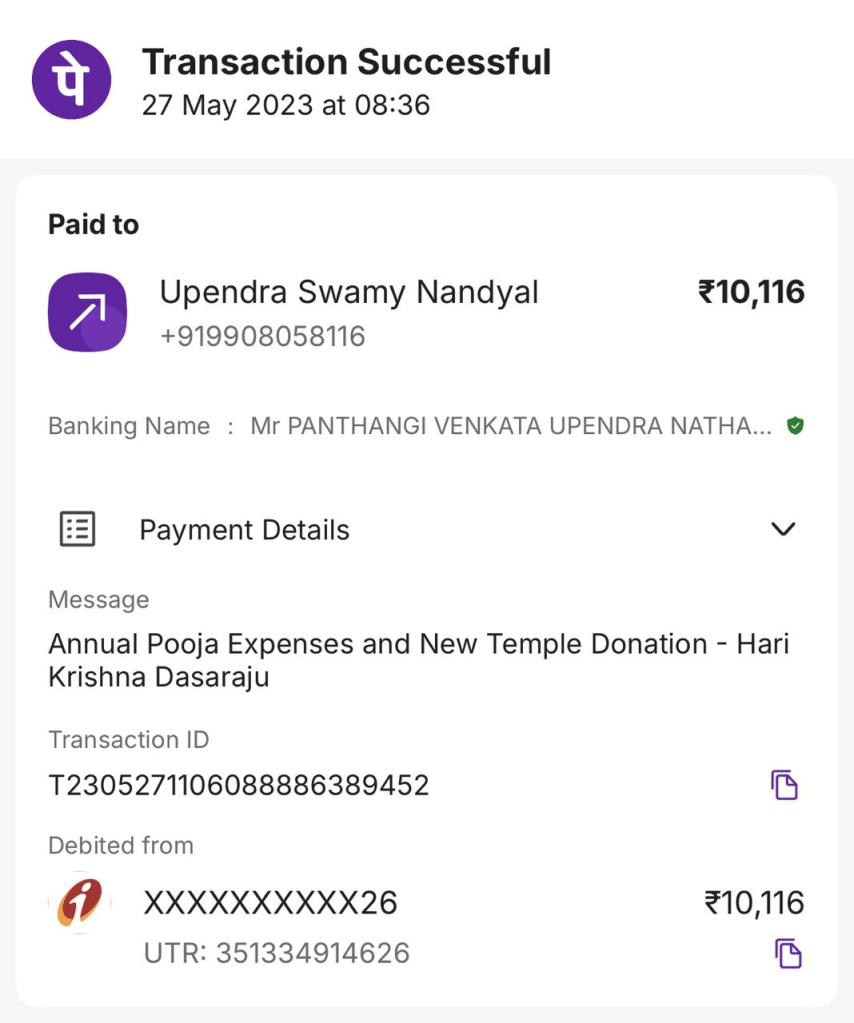
    In May 2023, we contributed ₹10,116 toward the annual pooja expenses and new temple donation for a temple in Nandyal, facilitated by Upendra Swamy.

    In every donation my family has made whether to the Shri Saibaba Sansthan Trust in Shirdi, the Venkatesawara Swamy Temple in Bangalore, or the temple in Nandyal I made sure to contribute ₹1,000 from my own pocket money. It’s my small way of participating, of learning the value of giving, and of honoring the traditions my parents have taught me since birth. That ₹1,000 is more than money it’s a piece of my heart, offered with gratitude.

    Why I Will Continue This Tradition

    As I prepare for the next chapter of my life applying to universities, exploring the world, and building my own future I carry this lesson with me: giving is not about how much you have, but how much you care.

    Whether it’s a small amount or a large sum, what matters is the heart behind it. My parents taught me that. The temples taught me that. And now, as I make my own contributions.

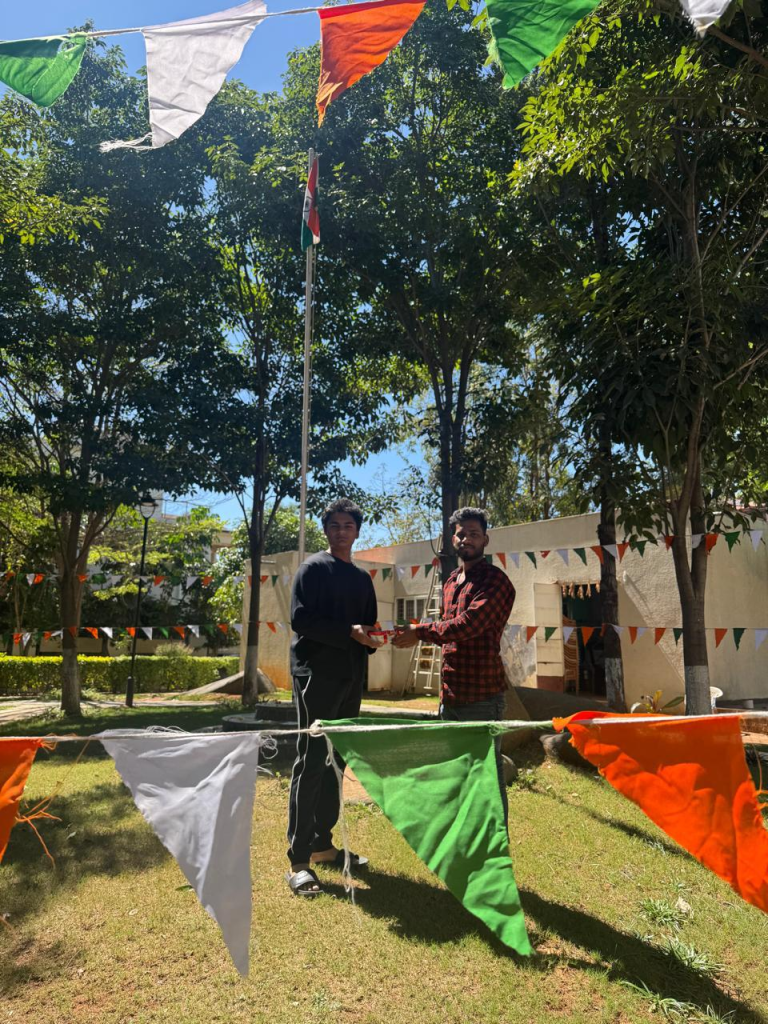
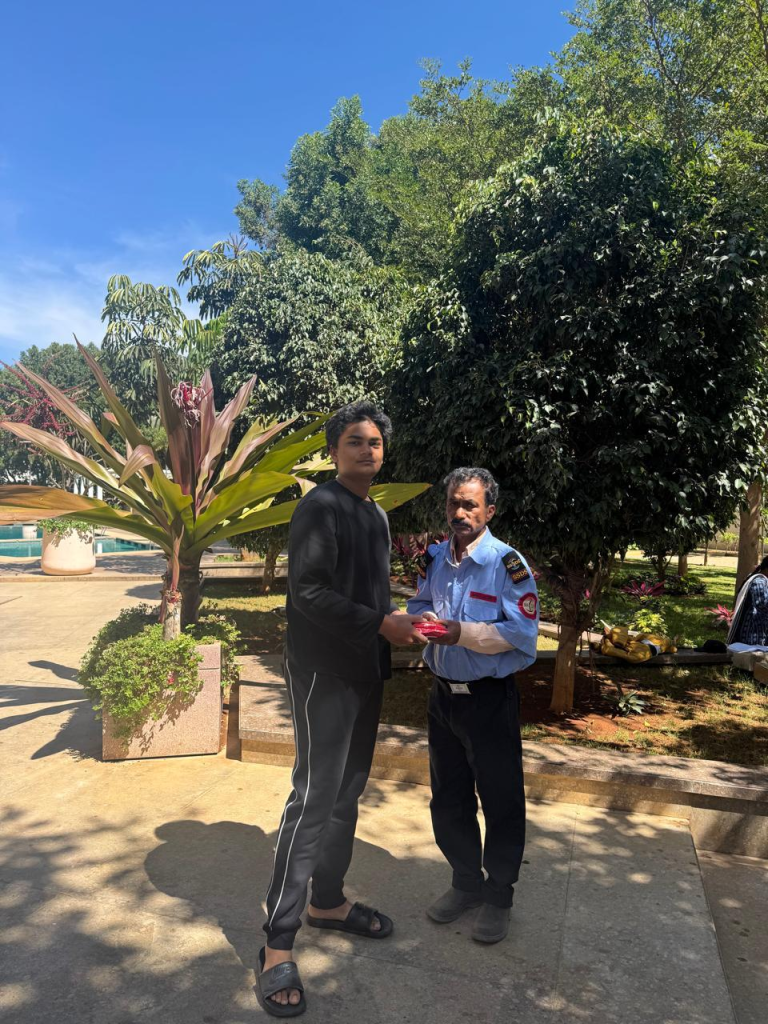
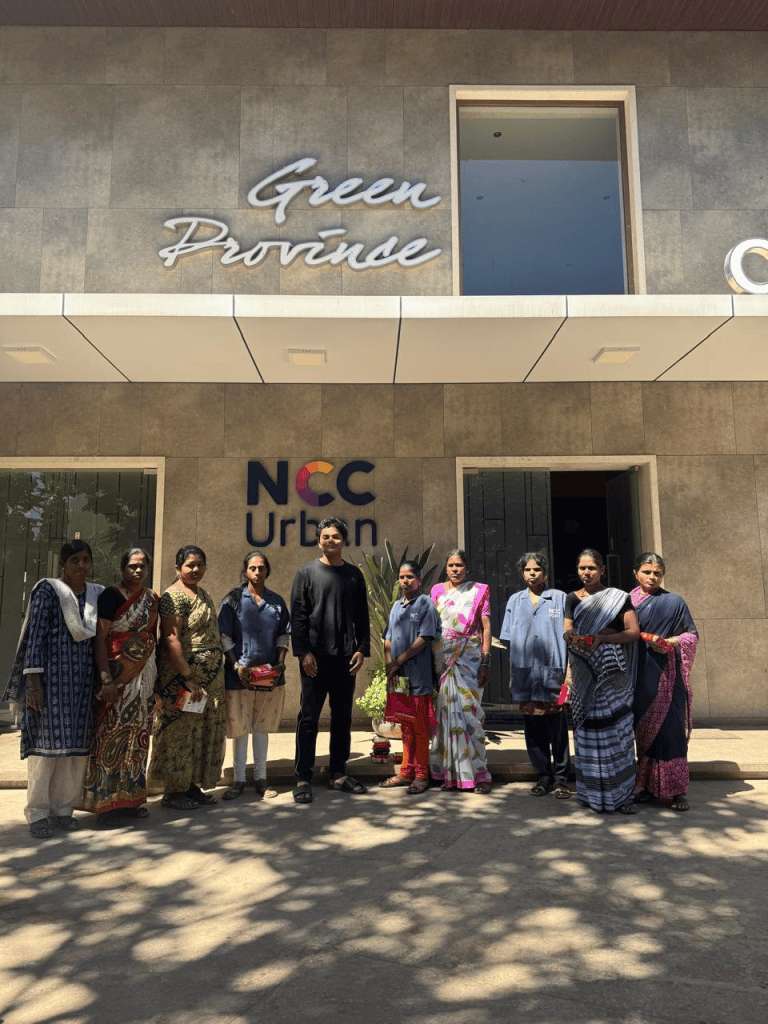
  • This initiative came from a simple intention I wanted to contribute something meaningful to my community instead of just being a passive part of it. A lot of the time, we move through our daily routines without really thinking about the systems and people that make everything work smoothly. I felt it was important to step back and do something, even if small, that acknowledges the people who keep things running in the background.

    The workers in our community security guards, maintenance staff, cleaners, and other support workers play a direct role in our everyday lives. They manage safety, handle operational issues, maintain shared spaces, and ensure that everything functions the way it should. Their work requires consistency, discipline, and reliability, and it has a real impact on the quality of life within the community. Despite this, their contribution often goes unnoticed because it’s seen as routine rather than essential.

    Distributing sweets wasn’t meant to be a big or symbolic gesture it was a straightforward way to show appreciation and create a moment of acknowledgment. It also helped me understand the value of engaging with the community more actively instead of just observing it. Small actions like this don’t change everything overnight, but they do shift perspective, both personally and collectively.

    Overall, this experience reinforced the idea that contributing to a community doesn’t always have to be large-scale or complex. It starts with awareness, intention, and taking initiative. Recognizing the role of people who are usually in the background is a step toward building a more respectful and aware environment, and it’s something I plan to continue through more consistent efforts in the future.

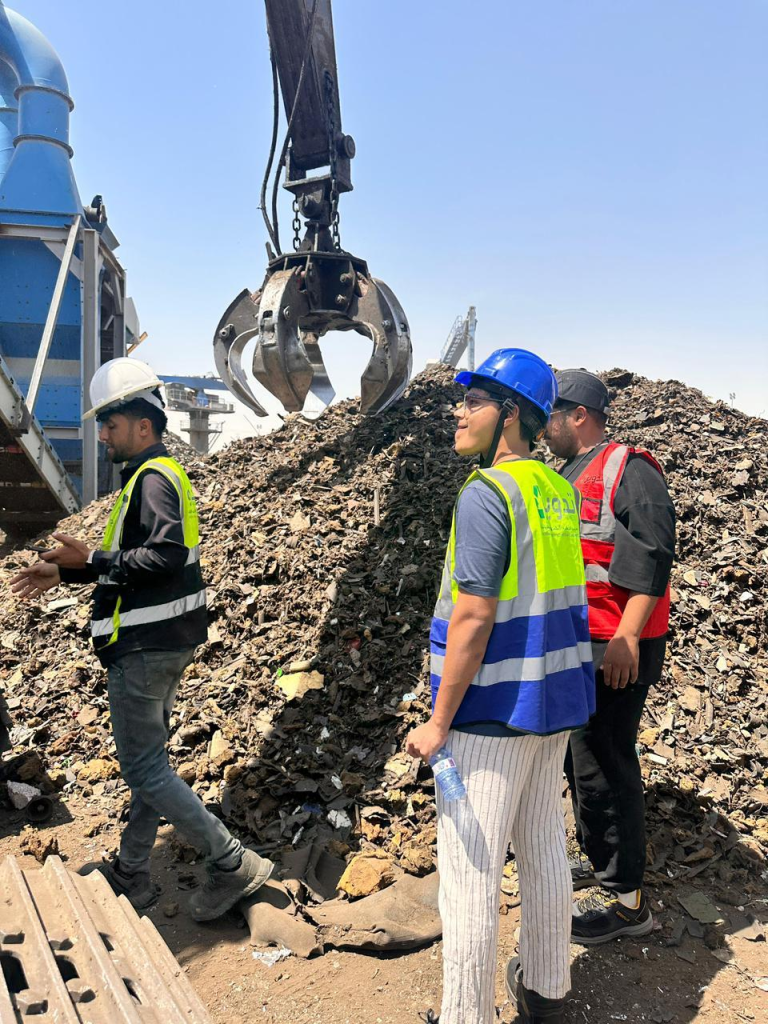
  • My visit to the Tadweer Waste Management facility was a crucial part of my e-waste project, offering a firsthand look into the operational realities of electronic waste management. This experience provided a comprehensive understanding of the entire process, from collection to export, and this report serves as a formal documentation of the observations and key insights gained from the on-site visit.

    The Global Context of E-Waste

    Electronic waste, or e-waste, is defined as discarded electrical or electronic devices, including a wide range of products from computers and mobile phones to refrigerators and air conditioning units. The growing volume of e-waste is a significant global issue, driven by rapid technological advancements and the fast pace at which people replace their electronics, and this waste stream is particularly problematic due to its complex composition, which includes both valuable and hazardous materials such as lead, mercury, and cadmium. Proper management is essential for both environmental protection and resource recovery; without proper recycling, these hazardous materials can leach into soil and water, posing a serious threat to ecosystems and human health. Tadweer Waste Management operates as a key component in this industry, providing professional solutions for the safe and efficient processing of these materials, and the visit provided a firsthand look at how a professional facility handles this complex waste stream with a high degree of precision and organization, showing its role in a broader global effort to manage electronic waste sustainably.

    Initial Deconstruction and Processing

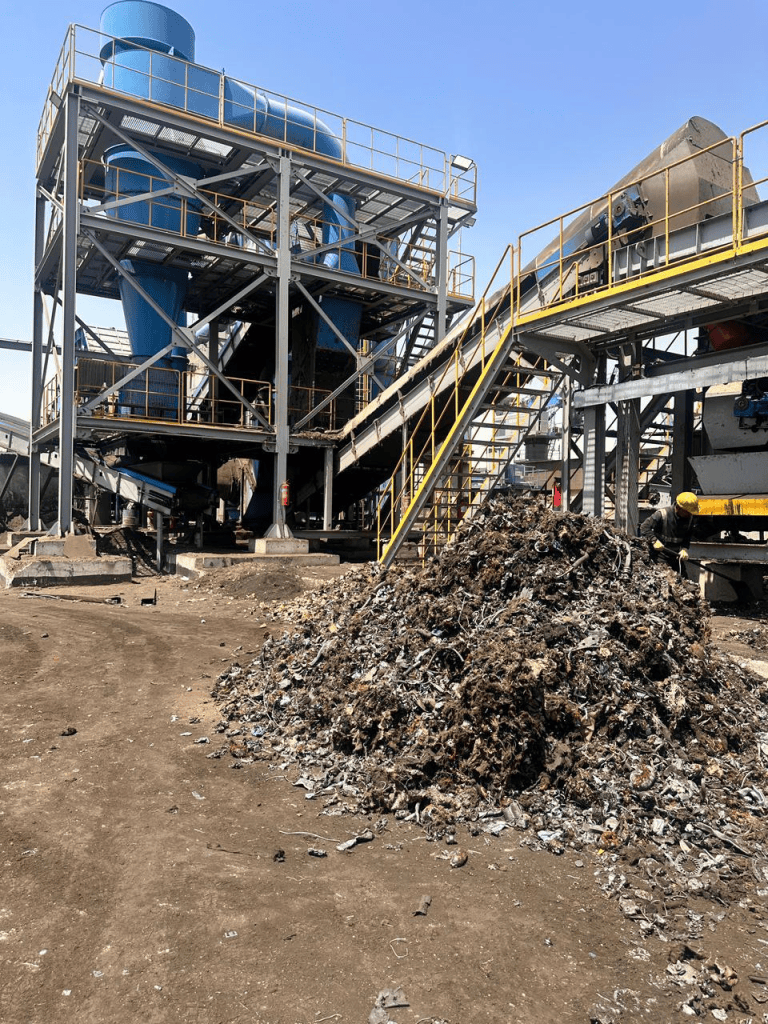
    The initial stage of the operation centered on large-scale machinery designed for high-volume deconstruction. My observations began with the powerful oil machines, which are specifically sourced from Germany and are used to break down raw iron and plastic. The heavy machinery efficiently reduces the sheer bulk of the incoming materials, a critical first step for the subsequent sorting processes. Following this, other crushers are used for a variety of materials, including plastics, foam, rubber, and electronic cables. The step-by-step nature of these processes, which is necessary for handling the diverse composition of e-waste, was apparent and indicative of a carefully planned system. The handling of larger and more complex materials was also a key part of the operation, with car parts made of aluminum and iron being compressed into dense bales. The efficiency of this process was demonstrated by a JBC, a large excavator, which was used to crush and transport car motor parts, and the continuous movement of materials and machinery highlighted a well-organized, industrial-scale system designed for maximum throughput. This initial phase of physical deconstruction is a necessary step for the more nuanced processes of material segregation that follow, showing that the foundation of effective e-waste management is the mechanical separation of components.

    A Local Focus on a Global Problem

    The choice to study e-waste in Riyadh, Saudi Arabia, was a deliberate one. As a resident of this rapidly developing city, I have observed the fast pace of technological adoption and the increasing consumption of electronics, and this trend contributes significantly to the local e-waste problem. By focusing on a facility like Tadweer, I could examine how a regional company addresses a global issue on a practical, local scale. The hands-on experience at the facility reinforced that effective e-waste management is not just a theoretical concept. For example, I learned that a key part of the segregation process is separating iron and plastic to prevent a chemical reaction between them that can cause a fire. This specific insight highlighted the detailed knowledge and safety measures required to run such an operation in a way that goes far beyond general environmental concepts, and it showed me that addressing e-waste requires a very specific and engineered solution that is relevant to local conditions.

    Advanced Sorting and Segregation

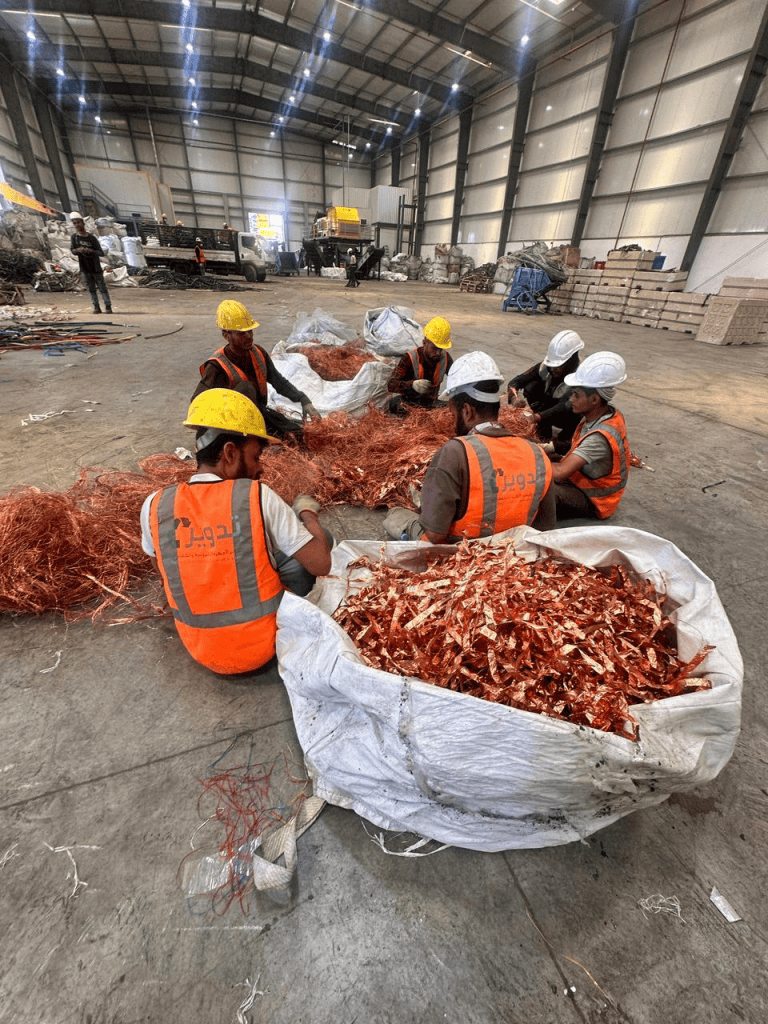
    A more advanced stage of the process involves the separation of mixed materials. A key piece of equipment observed was a transporter specifically designed for mixed parts, such as iron, plastic, and magnet. This specialized design and its dedicated use for separating these materials highlight the advanced engineering considerations and safety protocols built into the facility’s operations. The process of segregation extends to a wide range of metals, including aluminum, steel, brass, and zinc, each of which is routed to a different output path for further processing and transport. This systematic approach ensures that valuable resources are not lost during the recycling process, and it contributes to the facility’s overall efficiency. The final output consists of these segregated materials, which are then prepared for export. The primary destinations for these materials include countries such as the UAE, Indonesia, and India, and this part of the operation demonstrates the facility’s role within a larger, global e-waste supply chain, where initial processing in one country enables final recovery and reuse in others. The scale of this international trade further highlights the economic importance of e-waste recycling.

    Handling Specific Waste Streams

    The visit also provided insight into the handling of specific, high-volume waste streams, such as air conditioners and carbon from automotive parts. It was observed that the company receives broken air conditioning units from companies, which are later broken down, and this process involves the careful deconstruction of the units, with a particular focus on retrieving valuable aluminum and steel. This aspect of the business shows how the company provides a service for other businesses while simultaneously engaging in resource recovery. A particularly noteworthy process was the management of carbon from car parts. A grinder is used to break down the parts and isolate the carbon. The quality of this recovered carbon is a critical factor, and the company has implemented a specific testing procedure to ensure the material meets international standards. The notes detail that the carbon’s quality is tested through a laptop that is placed under a synthesis scanner. The carbon is first compressed and broken down into powdered form before being vaulted in a cylindrical container for testing. This multi-step process, from initial grinding to final quality assurance, demonstrates a commitment to producing high-quality, export-ready materials. It was also noted that certain “silk” crusher machines have different sized holes to fit the different sizes of silk parts, which are broken down for various purposes. These specialized tools and meticulous procedures show the facility’s advanced and detailed approach to material recovery.

    The Economic Viability of Recycling

    Finally, the visit provided a clear understanding of the economic value hidden within e-waste. A specific example was provided: one thousand kilograms of copper is valued at 14,000 riyal. This data point provides a clear sense of the economic value that is being reclaimed from the waste stream. The conversion of a waste product into a valuable good underscores the financial practicality of such operations. Beyond the direct financial returns from selling materials, there are indirect economic benefits, as e-waste management creates jobs, supports a circular economy, and reduces the need for energy-intensive raw material extraction. The company’s ability to operate profitably while also addressing a major environmental challenge shows a practical business model that others can copy, and the insights gained from the visit underscore that effective e-waste management is a complex, engineered solution that is essential for both environmental sustainability and economic practicality.

  • Rich Dad Poor Dad by Robert Kiyosaki is one of those books people hype up constantly you’ll hear students, investors, and even random people online talk about how it “changed their life.” When you finally read it, you start to understand why. It isn’t filled with complicated financial formulas or intimidating investment jargon. Instead, it uses simple storytelling to explain ideas that most people never learn in school. And surprisingly, that’s what makes it powerful.

    Kiyosaki builds the whole book around these two father types. One is his real dad, the poor dad, who had tons of schooling but stayed broke financially. The other is his buddy Mike’s dad, the rich dad, not so great in school but sharp on money matters. He does not bash school or put money on a pedestal. Instead, he shows how those two paths, the book learning versus money smarts, really steer where your life goes.

    The book shines because it stays so direct. Kiyosaki skips the preaching and just shares tales from his life. Early on, he dives into his kid days in Hawaii. He and Mike wanted badly to figure out riches. Rich Dad did not hand over cash or toss out tips. He had them hustle in his little store. Pay was next to nothing. They had to watch cash flow for real. That led to the big idea. Rich folks do not chase money. They get money chasing for them.

    This notion hits odd at the start. It even seems off base. Folks learn the flip side usually. Grind in class, land a steady gig, grab the check, and loop it till you retire. Kiyosaki says that loop traps you in the rat race. He does not call jobs evil. Relying just on pay without assets keeps you short of real money freedom.

    He circles back often to this basic setup. Assets feed cash to your pocket. Liabilities suck it out. It rings simple. Yet look at how regular people deal with funds. The truth hits home. Lots see their ride, home, or fancy upgrades as gains. Truth is, those pull cash monthly. Kiyosaki calls assets the stuff that brings in flow. Think rentals, ventures, stocks, ideas you own, or items that build worth over years.

    The book stands out from other money guides because it connects so well. Poor Dad sounds like any parent pushing study hard and snag a solid job. He stands for the safe old route. Rich Dad pushes a head change. That means smart gambles, tax know how, setup systems, and owner thinking over worker mode. You see the book does not pick one dad. It shows how views mold what you live.

    Financial smarts take center stage too. That covers handling cash, flow tracking, putting money to work, tax rules, and startup basics. Kiyosaki says schools skip all that. It leaves grown ups lost on money hurdles in life. Like it or not, grads often nail tough math but blank on loans, tax levels, or where to invest.

    The book nails tearing down mind blocks. Kiyosaki gets real on fear, mainly losing cash dread. He says it stops folks from grabbing chances. Rich versus poor comes down not to chance. It ties to how you think. Wealthy risk with plan. Poor dodge from gut. Middle folks grab drains as wins. Rich chase flow makers.

    Sure, the book draws flak, and a solid take covers that. Some say it dumbs down too much. Kiyosaki skips how to steps for deals, properties, or runs. He sticks to core ideas. That bugs those wanting exact moves. Folks argue if rich dad lived or just served the story. Even if made up, the thoughts stick and help tons of readers. Later parts widen to taxes, company setups, and rich folks gaming rules fair. Kiyosaki lays out how firms shield, cut taxes, and bend easy over wage work. For younger eyes, it flips how owners and investors tick.

    He stresses doing over book talk for learning. Money skills grow from tries. That means tiny bets, slip ups, market digs, grabbing holds, flipping goods, and keep going. Push past dumb looks or flops. Those stall you. Deeper in, the push feels real without fake hype. Kiyosaki skips blind passion chases. He points to aimed growth. Take work for what it builds, not the pay. He lists marketing, selling, talking, running teams, leading. Those open doors forever. A key bit sticks when he hits hidden chances for the untrained. No money eye sees a beat up place as junk. Trained view spots a buy. No skills see venture as scare. Skills see power play. The book urges mind training to spot wins, not flee them.

    In the end wraps, Kiyosaki hits the heart again. Money free does not need rich birth or fat pay. Build holds, get money lingo, shift think to help not hurt. All in, Rich Dad Poor Dad kicks off money grasp past just save and cut spend. It drops rules, view flips, life angles schools miss. Words stay plain. Cases clear. Tale style hooks you through.

  • Introduction: What Shoe Dog Is Really About

    Shoe Dog is not a motivational business book in disguise. It is a brutally honest memoir about uncertainty, obsession, risk, and endurance. Phil Knight doesn’t write as a confident billionaire looking back he writes as the same unsure, introverted kid who constantly questioned whether Nike would survive another year. The book dismantles the myth of overnight success and replaces it with a story of decades of stress, near-collapse, and stubborn belief.

    Early Life & The Seed of an Idea

    Phil Knight grows up reserved, thoughtful, and unsure of his purpose. After graduating from Stanford, he feels lost something many students relate to. During a trip to Japan, he notices how Japanese cameras are outperforming German ones and wonders if the same could happen with shoes. This becomes the foundation of his idea: importing high-quality Japanese running shoes to compete with Adidas.

    He doesn’t overthink it. He doesn’t wait for permission. He simply starts.

    Key insight: Great ideas often start as questions, not master plans.

    Blue Ribbon Sports: The Pre-Nike Years

    Knight founds Blue Ribbon Sports, selling shoes out of the trunk of his car. He partners with Bill Bowerman, his former track coach, who becomes one of the most important figures in the book. Bowerman is obsessed with improving athletic performance and constantly experiments with shoe designs, even pouring rubber into his wife’s waffle iron to create better soles.

    Despite early traction, the company is always broke. Every dollar earned goes straight back into inventory. Banks don’t trust Knight, suppliers doubt him, and cash flow problems are constant.

    Key characters introduced:

    • Bill Bowerman – Innovation-driven, demanding, brilliant
    • Phil Knight – Vision-focused, emotionally reserved, relentless

    Key insight: Early growth doesn’t equal stability.

    Living on the Edge: Cash Flow & Crisis

    One of the strongest themes in Shoe Dog is how Nike is always on the brink of disaster. Even when sales skyrocket, the company is technically drowning. Knight describes how success makes the problems bigger, not smaller more employees, more inventory, more pressure.

    Banks repeatedly threaten to shut the company down. Knight learns that traditional financial institutions do not support unconventional thinkers. This constant pressure shapes his leadership style: secretive, cautious, and internalized.

    Key insight: Scaling a business often increases fear, not confidence.

    The Nike Identity Is Born

    The transition from Blue Ribbon Sports to Nike marks a turning point. The company begins to focus on storytelling, athletes, and belief rather than just selling shoes. Nike’s early hires are unconventional but loyal people who care deeply about running, sports, and the mission. Knight doesn’t manage through authority. He hires people smarter than him and gives them room to operate. The culture becomes intense, chaotic, and deeply committed.

    Important team members:

    • Jeff Johnson – Emotionally invested, loyal, detail-oriented
    • The early Nike team (“Buttfaces”) – Young, driven, obsessive

    Key insight: Culture is built through shared struggle.

    Athletes, Branding & Risk

    Nike’s breakthrough doesn’t come from advertising budgets and it comes from bold bets on athletes. Knight understands early that athletes are storytellers. Endorsements are risky, but Nike embraces that risk before competitors do. This is where Nike starts becoming more than a shoe company it becomes a symbol of ambition and rebellion.

    Key insight: Branding is about belief, not logos.

    Legal Battles & Supplier Conflict

    One of the most intense sections of the book details Nike’s legal war with its Japanese supplier. Lawsuits threaten to destroy the company. Knight is emotionally exhausted, mentally drained, and increasingly isolated. This period reveals the personal cost of leadership missed family moments, constant anxiety, and emotional distance. Despite everything, Knight refuses to quit.

    Key insight: The hardest part of leadership is carrying uncertainty alone.

    Personal Life & Emotional Cost

    Knight doesn’t romanticize entrepreneurship. He openly admits that building Nike damaged parts of his personal life. He struggles to express emotion, even during major family moments. Success does not fix these issues it exposes them.

    This honesty is what makes Shoe Dog powerful.

    Key insight: Success doesn’t heal personal flaws.

    Nike Survives and Wins

    Nike eventually overcomes legal battles, financial pressure, and competition to become a global powerhouse. But Knight ends the book not with celebration, but reflection. The goal was never money it was the journey, the people, and the meaning created along the way.

    Even at the top, Knight remains humble, aware that luck, timing, and people mattered just as much as talent.

    Core Themes of Shoe Dog

    • Persistence beats talent
    • Uncertainty is constant
    • People build companies, not ideas
    • Risk is unavoidable
    • The journey defines the reward

    Why Shoe Dog Matters (Especially for Students)

    Shoe Dog shows that:

    • You don’t need everything figured out
    • Feeling lost is part of the process
    • Consistency matters more than confidence
    • Failure is feedback, not defeat